

King Asa
Asa did what was good and right in the eyes of the Lord his God.

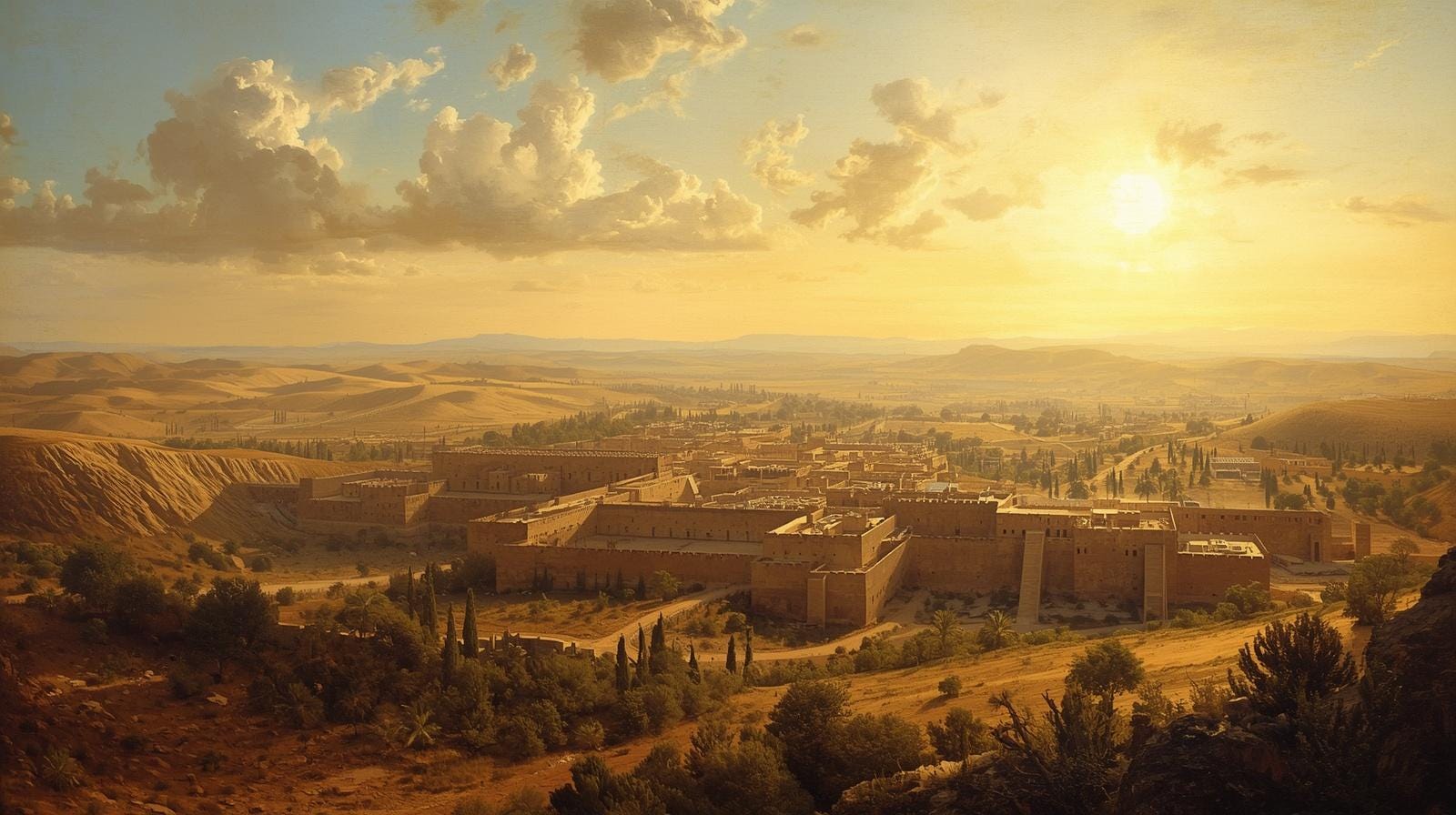
2 Chronicles 14:1-6 (NIV)
1 And Abijah rested with his ancestors and was buried in the City of David. Asa his son succeeded him as king, and in his days the country was at peace for ten years.
2 Asa did what was good and right in the eyes of the Lord his God. 3 He removed the foreign altars and the high places, smashed the sacred stones and cut down the Asherah poles. 4 He commanded Judah to seek the Lord, the God of their ancestors, and to obey his laws and commands. 5 He removed the high places and incense altars in every town in Judah, and the kingdom was at peace under him. 6 He built up the fortified cities of Judah, since the land was at peace. No one was at war with him during those years, for the Lord gave him rest.
The Line He Came From
To understand what Asa did, you have to understand what he walked into.
His grandfather Solomon had begun brilliantly — the wisest man of his generation, the builder of the temple, the one who expanded Israel’s reach and reputation across the known world. But Solomon’s wisdom did not protect him from his own appetites. Seven hundred wives. Three hundred concubines. And the slow, steady drift into the idolatry of the nations he had made alliances with. The man who built the house of God ended up building shrines to foreign gods on the hills outside Jerusalem.
His father Rehoboam made things worse. He treated his subjects with a harshness that tore the kingdom in two. The ten northern tribes broke away and established their own kingdom. The fracture that would define Israelite history for generations began with his refusal to listen.
Then came Abijah — Asa’s father. He sinned like those before him. His heart was not wholly true to God.
This is the inheritance Asa received. Not a clean slate. Not a family legacy of faithfulness to build on. A line of men who had started well and drifted, or never started well at all. A kingdom shaped by compromise, idolatry, and division.
And then the text says something remarkable.
Asa did what was good and right in the eyes of the Lord his God.
The Courage of a Different Choice
The past has a gravity to it.
When the people around you have always done things a certain way — when the examples set before you are examples of compromise and drift — the path of least resistance is to follow. To absorb the culture you were raised in. To become what you were shown. Most people do. Not out of malice but out of the quiet, accumulated weight of what they have always known.
Asa looked at everything his father and grandfather had built — the foreign altars, the high places, the sacred stones, the Asherah poles — and he took it all down. He did not preserve it out of respect for tradition. He did not leave the worst of it standing to avoid offending people who had grown attached to it. He removed it. All of it. From every town in Judah.
This is not a small thing. To dismantle what your predecessors built requires a particular kind of courage — the courage to say that what came before was wrong, and to act on that assessment even when it costs something. Even when it means standing against the current of everything that came before you.
The text does not tell us it was easy. It tells us he did it.
A bad past does not have to define you. The family you came from, the examples you were given, the patterns you inherited — none of these have the final word on who you become. With God’s help, the chain can be broken. Asa is the evidence.
What He Built Instead
Having torn down what did not belong, Asa did not leave a vacuum.
He commanded Judah to seek the Lord — the God of their ancestors. He called the people back to something older and truer than the compromises that had accumulated over the previous generations. Not a new religion but a return. A reorientation toward the God who had always been there, who had always been the source of everything good that Israel had ever experienced.
And then he built.
Fortified cities. The infrastructure of a kingdom that intended to endure. He did not spend the years of peace waiting for trouble to arrive. He used the rest God gave him to prepare — to strengthen what needed strengthening, to establish what needed establishing.
The peace itself is worth noting. The Lord gave him rest. This is not incidental language. The rest is connected directly to what Asa had done — to the removal of the things that had no place in the life of God’s people, and the reorientation of the kingdom toward its proper foundation. The peace is a fruit. It grows from the root of genuine faithfulness.
This is the pattern the passage is showing us. Tear down what does not belong. Return to God. Build from that foundation. And receive the rest that comes from being properly aligned with the One who gives it.
The Weight of What He Faced
The fuller story of Asa includes a moment that makes his early faithfulness even more striking.
A million-man army came against him. Judah had three hundred thousand. The odds were not merely unfavourable — they were the kind of odds that make military calculation feel pointless. There was no strategy that closed that gap.
And Asa cried out to the Lord.
Lord, there is no one like you to help the powerless against the mighty. Help us, Lord our God, for we rely on you.
Not on preparation. Not on the fortified cities he had built. Not on his own record of faithfulness. On God alone. The prayer is a complete acknowledgement that whatever he had done, whatever he had built, whatever courage he had shown in the years before — none of it was enough for this moment. Only God was enough for this moment.
And God gave him the victory.
This is the shape of genuine faith. Not the confidence of a person who believes their own obedience has earned them a favourable outcome. But the humility of a person who knows that everything — including the outcome of the battle directly in front of them — is in God’s hands, and calls out to Him from that place of honest dependence.
The Warning in the Rest of the Story
Asa’s story does not end at the victory.
Later in his reign, when a different threat arose, he did something different. Instead of crying out to God as he had before, he took silver and gold from the temple treasury and bribed a foreign king to come to his aid. He turned to his own resources. To strategy and wealth and political manoeuvring. To the things he could control.
The prophet Hanani came to him and said plainly — you have done foolishly. Because you did not rely on the Lord, you will have war.
And Asa, the man who had torn down the idols and commanded Judah to seek God, threw the prophet in prison. Then when he was struck with a disease in his feet, he sought the doctors and not the Lord.
The man who began so well finished poorly.
This is not included in the passage for today — but it shadows everything in it. The courage Asa showed in tearing down the high places was real. The faithfulness of his early years was genuine. The victory God gave him over the million-man army was actual. And none of it immunised him against the slow drift back toward self-reliance.
The warning is not that Asa was a fraud. The warning is that the posture of dependence on God is not a one-time decision. It is a daily one. Success — especially the kind that comes from genuine faithfulness — carries its own danger. The temptation to begin trusting what you have built rather than the One who helped you build it is real, and it does not announce itself loudly. It arrives quietly, in the middle of a crisis, as the thought that this time you can handle it yourself.
Walk On
The passage today asks three things of us.
First — do not let a bad past define you. Whatever you inherited, whatever was modelled for you, whatever patterns were laid down before you arrived — you are not obligated to continue them. Asa looked at his father’s legacy and chose differently. That choice is available to all of us.
Second — have the courage to do what is right even when it is costly. It is one thing to believe the right things. It is another to act on them when acting requires dismantling something that has been standing for a long time. Belief without action is leaves without fruit. Asa did not just believe that the high places were wrong. He took them down.
Third — put your whole trust in God. Not in what you have built. Not in what you have earned. Not in the record of your own faithfulness. In Him. The million-man army taught Asa that. The tragedy of his later years shows what happens when that lesson is forgotten.
The Lord is with you while you are with Him. Seek Him and He will be found. That is the promise. It was true for Asa. It is still true today.
All glory to God — forever and ever. Amen. 🤍
If this reflection spoke to you, consider subscribing to follow along my journey of faith, meditation, and rebuilding — one day at a time. Your support truly means more than you know. ❤️