

King Uzziah
He sought God during the days of Zechariah, who instructed him in the fear of God. As long as he sought the Lord, God gave him success.

2 Chronicles 26:1-21 (NIV)
3 Uzziah was sixteen years old when he became king, and he reigned in Jerusalem fifty-two years. 4 He did what was right in the eyes of the Lord, just as his father Amaziah had done. 5 He sought God during the days of Zechariah, who instructed him in the fear of God. As long as he sought the Lord, God gave him success.
16 But after Uzziah became powerful, his pride led to his downfall. He was unfaithful to the Lord his God, and entered the temple of the Lord to burn incense on the altar of incense. 17 Azariah the priest with eighty other courageous priests of the Lord followed him in. 18 They confronted him and said, “It is not right for you, Uzziah, to burn incense to the Lord. That is for the priests, the descendants of Aaron, who have been consecrated to burn incense. Leave the sanctuary, for you have been unfaithful; and you will not be honored by the Lord God.” 19 Uzziah, who had a censer in his hand ready to burn incense, became angry. While he was raging at the priests in the house of the Lord, leprosy broke out on his forehead.
As Long as He Sought the Lord
The early chapters of Uzziah’s reign are among the most impressive in the whole of the kings of Judah.
He became king at sixteen and reigned for fifty-two years — one of the longest reigns in Judah’s history. He sought God during the days of Zechariah, who instructed him in the fear of God. He built towers and dug cisterns and trained an army and developed military technology and expanded the borders of the kingdom. The fame of his name spread far because he was greatly helped until he became powerful.
That last phrase is the hinge the whole story turns on.
As long as he sought the Lord, God gave him success.
The success was real. The building and the military victories and the agricultural expansion were genuine. God’s help was genuine. The prosperity of Uzziah’s early reign was the fruit of genuine seeking — a king oriented toward God, instructed in the fear of God, building his kingdom on the foundation of genuine dependence.
And then the success became the problem.
After He Became Powerful
But after Uzziah became powerful, his pride led to his downfall.
The transition is one of the most consistent and sobering in Scripture. Not the failure that came from weakness or poverty or defeat. The failure that came from strength and wealth and success. The downfall that pride produced — pride that was itself produced by the success that God gave to the seeking.
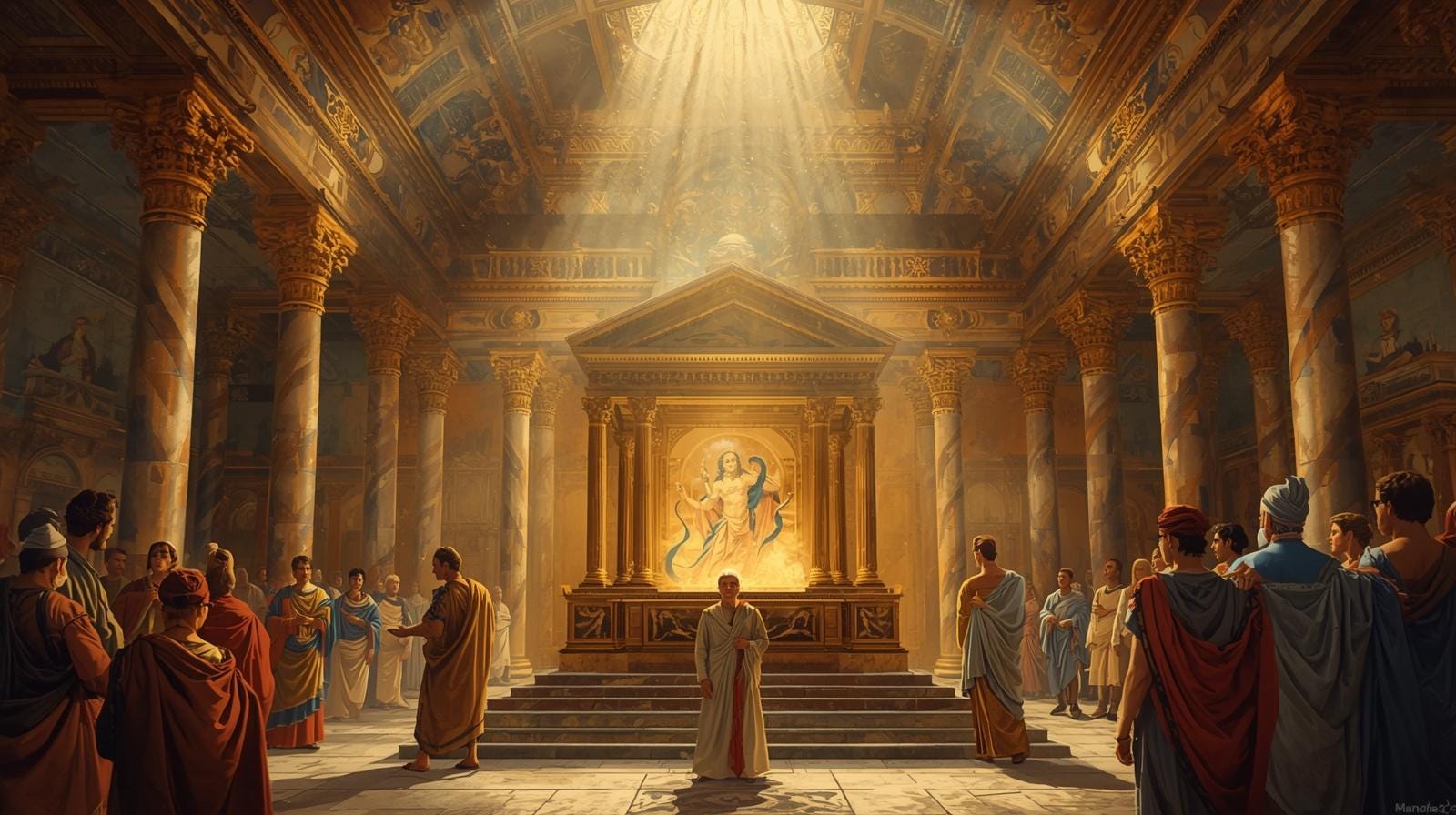
Uzziah walks into the temple to burn incense on the altar. This was not permitted — the burning of incense was the exclusive privilege of the consecrated priests, the descendants of Aaron. The boundary was not arbitrary. It was part of the structure of the covenant that distinguished the offices God had established. King was king. Priest was priest. The same person could not be both — that unity would not come until the one who was both priest and king in the order of Melchizedek, still centuries in the future.
Uzziah knew this. He had been instructed in the fear of God. He had sought God long enough to build an empire on the back of it. This was not ignorance. This was the slow, accumulating drift of a man whose attention had gradually moved from God to himself — and who, in the moment of the incense offering, was no longer asking what God had authorised but what he was now powerful enough to do.
The success had redirected the gaze. What had been directed toward God had shifted inward. The affection followed the attention. And the action followed the affection.
Confrontation as Mercy
Eighty-one priests followed him in. Led by Azariah the chief priest. And they confronted him directly.
It is not right for you, Uzziah, to burn incense to the Lord. That is for the priests, the descendants of Aaron, who have been consecrated. Leave the sanctuary, for you have been unfaithful; and you will not be honored by the Lord God.
This took courage. Eighty-one men confronting a king in the middle of an act he had clearly decided to perform. There was no ambiguity about the risk — Uzziah was powerful, his name was famous, his military was formidable. These priests were not his enemies and the confrontation was not an attack.
It was a call to attention.
The priests were offering Uzziah something more valuable than they knew — the opportunity to stop, to hear, to repent, to turn back before the drift became destruction. Every confrontation that comes with truth attached to it is, underneath the discomfort, a form of mercy. The person who tells you the difficult thing you do not want to hear, who interrupts the pattern you have been comfortable in, who stands in the way of the incense you are about to burn — that person may be the most caring person in the room.
Not every correction is rejection. Sometimes it is God’s mercy arriving through another person’s voice before the leprosy breaks out.
What the Anger Revealed
Uzziah became angry. While he was raging at the priests in the house of the Lord, leprosy broke out on his forehead.
He did not stop. He did not hear. He raged. And in the raging, the leprosy appeared.
The anger is diagnostic. Not sinful simply because it is anger — Jesus was angry at the money changers in the temple, angry at the hardness of heart He encountered. Anger is not automatically sin. But anger reveals. It surfaces what the heart has been protecting, what the attention has settled on, what has become so important to the self that a threat to it produces the heat of rage.
Uzziah’s anger in the house of the Lord revealed exactly where his attention had gone. The priests were not threatening God. They were threatening Uzziah’s sense of himself — his power, his standing, his right to do what he wanted in the kingdom he had built. The rage came because something self-directed was being challenged, and the self had become the thing his heart was protecting.
This is the question anger always asks if we are willing to hear it.
What am I defending? Is my attention on God or on myself?
The pause between the feeling of anger and the expression of it is the space where that question can be asked. Not to suppress the anger or pretend it is not there. But to examine what it is protecting — because what we defend under pressure reveals where our affection actually lives.
If the anger is protecting something true about God or genuine justice — it is pointing toward something worth the anger. If the anger is protecting the self, the ego, the standing, the image — it is the signal that attention has drifted inward and is being guarded there by the heat of rage.
Uzziah’s anger told the truth about him before the leprosy did. The priests had called him to attention. The anger was the evidence that his heart was no longer in a place where the call could be received.
The Two Truths That Re-Centre
The drift that destroyed Uzziah is not unique to kings. It is the drift of any life that has received success and allowed the success to gradually redirect the attention from the giver to the gift — and then from the gift to the self that is now in possession of it.
The two truths that re-centre are creation and redemption.
Creation — because everything that Uzziah had, everything he had built, everything he was capable of, came from somewhere that was not him. The life in his body. The intelligence that designed the military technology. The rain that fell on his cisterns. The soil that produced the harvests. The favour of God that turned his seeking into success. None of it originated with him. He received it all. A person who has genuinely absorbed the truth that everything they are and have came to them as gift — that they are a created being, dependent at the most fundamental level on the one who made them — does not walk into the temple with a censer as if the boundary that applies to everyone else does not apply to them.
Redemption — because if creation leaves no room for pride in what we have received, redemption leaves no room for pride in what we have achieved. The cross does not reward the morally successful. It rescues the sinner. The one on the cross was sinless. The ones He was redeeming were not. The whole of redemption flows from His action, His sacrifice, His obedience — and receives us as broken, beloved, infinitely valued in His sight despite everything we have done and failed to do. There is no version of that story in which the redeemed person walks away with grounds for self-congratulation.
Paul understood this. I count everything as loss because of the surpassing worth of knowing Christ Jesus my Lord. Not some things — everything. The accomplishments that would have made him the most impressive person in the room were counted as loss because of the surpassing worth of knowing Christ. The two truths had done their work in him. The attention was on Christ. The affection followed. The action followed the affection.
We Need People
Uzziah had Zechariah once — the man who instructed him in the fear of God, whose presence and teaching corresponded with the most faithful season of his life. After Zechariah, the record is silent about who was speaking into Uzziah’s life. And without that voice, the drift accelerated until eighty-one priests had to gather in the temple to say what Zechariah might have said before the censer was in his hand.
We need people who redirect our gaze. Not flatterers who confirm the direction of our drift. People who will say the true thing when we do not want to hear it. People whose voice carries the weight of genuine relationship and genuine love and who use that weight to point us back to the two things that can hold the attention where it needs to be held.
God created you. Christ redeemed you.
Find those people. And be those people. The confrontation is not always comfortable to give or to receive. But the confrontation that comes before the leprosy is mercy. The one that comes after is too late for what the confrontation could have prevented.
Not every correction is rejection. Sometimes it is the most caring thing another person can do.
Four Questions
The story of Uzziah is a story of attention — where it was directed, how it shifted, what the affection and action followed, and where a call to attention came too late to be received.
Four questions worth sitting with honestly today.
What has captured your gaze — your attention? What are you looking at most consistently, most naturally, most instinctively? Where does the mind go when nothing is pressing it in a particular direction?
What has captured your heart — your affection? What do you love? What do you protect? What, when threatened, produces the heat of anger that reveals what you have been guarding?
What direction is your life moving — your action? The attention and the affection always produce action eventually. Where is the cumulative direction of your choices pointing?
And — where is God graciously interrupting? Where is the call to attention arriving in your life right now? The difficult conversation. The situation that is not resolving the way you expected. The person who keeps saying the thing you do not want to hear. The quiet persistent sense in prayer that something has drifted.
The priests who confronted Uzziah were offering him a gift he could not receive because his heart had moved too far from the place where the gift could be accepted. The call to attention is most useful before the heart has hardened to the point of rage.
What is God calling your attention back to today?
All glory to God — forever and ever. Amen. 🤍
If this reflection spoke to you, consider subscribing to follow along my journey of faith, meditation, and rebuilding — one day at a time. Your support truly means more than you know. ❤️