

Never Hungry
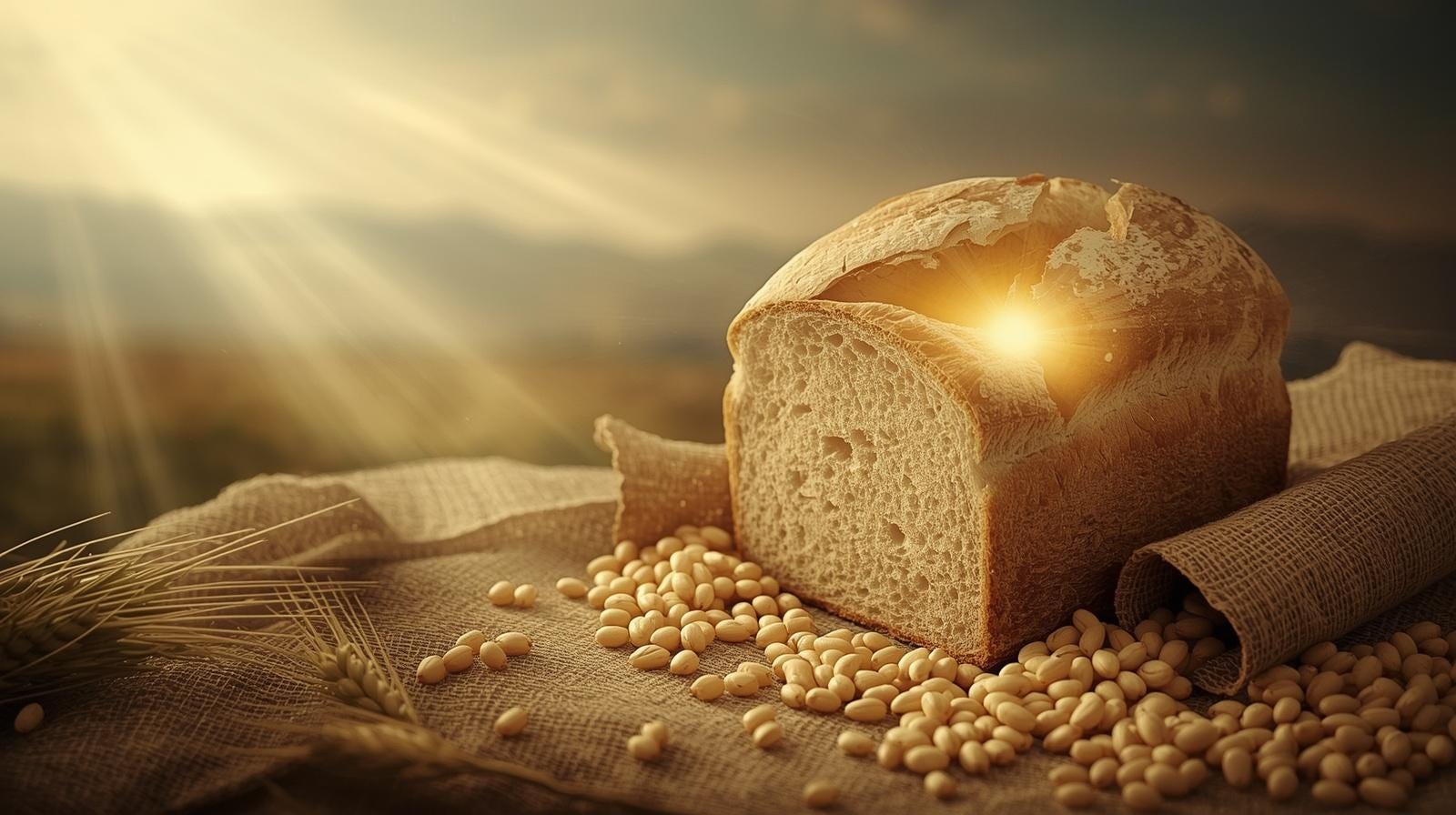
Then Jesus declared, “I am the bread of life. Whoever comes to me will never go hungry, and whoever believes in me will never be thirsty.

John 6:35-40 (NIV)
35 Then Jesus declared, “I am the bread of life. Whoever comes to me will never go hungry, and whoever believes in me will never be thirsty. 36 But as I told you, you have seen me and still you do not believe. 37 All those the Father gives me will come to me, and whoever comes to me I will never drive away. 38 For I have come down from heaven not to do my will but to do the will of him who sent me. 39 And this is the will of him who sent me, that I shall lose none of all those he has given me, but raise them up at the last day. 40 For my Father’s will is that everyone who looks to the Son and believes in him shall have eternal life, and I will raise them up at the last day.”
The Day After the Miracle
The day before this, Jesus had fed five thousand people with five loaves and two fish. The crowd was electrified. They wanted to make Him king by force. He withdrew. And the next day, the crowd found Him again — and Jesus, knowing exactly why they had come, told them plainly: you are looking for me because you ate the loaves and had your fill, not because you understood the sign.
They wanted more bread. Jesus tells them what the bread was pointing toward.
I am the bread of life.
The loaves that fed five thousand people were a sign — a physical demonstration of something Jesus is in His own person. Bread satisfies hunger temporarily; you eat and you will be hungry again tomorrow. Jesus is offering something the loaves could only point toward — a satisfaction that does not need to be repeated, because it addresses a hunger deeper than the stomach.
Whoever comes to me will never go hungry, and whoever believes in me will never be thirsty.
Coming and believing are described as the same action from two angles. This is not a transaction completed once and then repeated, like eating bread every day to stay alive. It is a relationship entered into — and the satisfaction it produces does not run out the way bread does.
You Have Seen Me and Still You Do Not Believe
There is something almost grieving in verse 36. The crowd has seen Him. They were there for the feeding of the five thousand. They have the evidence directly in front of them — and still, they do not believe.
This is the same diagnosis from John 3 in a different setting. The problem is not insufficient evidence. The light has come into the world; the bread of life is standing in front of them, having just performed an unmistakable sign. And still — not believing. The seeing did not produce the believing. Something else has to happen for that.
All Those the Father Gives Me Will Come
Verses 37 through 40 are some of the most theologically weighty in the gospel, and they hold two things together that can feel like they are pulling against each other — until you notice how Jesus actually frames them.
All those the Father gives me will come to me, and whoever comes to me I will never drive away.
The first half describes something happening from the Father’s side — a giving, a drawing, that results in people coming to Jesus. The second half is addressed to the person standing in front of Him, in the present tense, with an absolute promise: whoever comes — I will never drive away.
Notice what Jesus does not do. He does not tell the crowd to go figure out whether they are among “those the Father gives.” He gives them something they can act on immediately — come, and you will not be driven away — and leaves the deeper mystery of the Father’s giving as something that becomes visible only in the coming itself. The doctrine is not meant to be a hurdle a person has to clear before they’re allowed to come. It is the assurance, after coming, that the coming was not an accident — that there was a hand behind it that will not let go.
I will never drive away is one of the most unconditional promises in all of Scripture. Not — I will not drive you away if you maintain a certain standard. Not — until you fail badly enough. Never. The door, once entered, does not close from His side.
Not My Will But His
I have come down from heaven not to do my will but to do the will of him who sent me.
Jesus describes His entire mission as obedience to the Father’s will — and then He tells us, specifically and concretely, what that will is.
This is the will of him who sent me, that I shall lose none of all those he has given me, but raise them up at the last day.
The Father’s will, as Jesus describes it here, is not abstract. It is a will to keep. To lose none. The image is almost custodial — those given to the Son are entrusted to Him, and the Father’s will, which Jesus has come to do, is that not one of them be lost. Whatever it costs — and it will cost everything — losing none of them is the mission.
And then verse 40 brings it to the individual, standing in front of Him, right now:
Everyone who looks to the Son and believes in him shall have eternal life, and I will raise them up at the last day.
Looking and believing — the same posture as coming, as hearing in John 5. And the promise has two parts that span the whole of time. Eternal life — now, the present possession. And raised up at the last day — the future completion, the resurrection, the same hope Jesus described to Martha at Lazarus’s tomb. The beginning and the end of the story, both secured in the same sentence, both resting on the same will of the Father and the same faithfulness of the Son.
Walk On
The crowd wanted bread that would refill their stomachs. Jesus offered them Himself — bread that satisfies a hunger bread cannot reach.
If you have come to Him — however uncertainly, however recently, however much you doubt the quality of your own coming — the promise is not conditional on the quality of the coming. Whoever comes, I will never drive away. The Father’s will is that none be lost. Not one.
Come hungry. Come thirsty. He has never turned anyone away yet.
All glory to God — forever and ever. Amen. 🤍
If this reflection spoke to you, consider subscribing to follow along my journey of faith, meditation, and rebuilding — one day at a time. Your support truly means more than you know. ❤️