

True Worship
Yet a time is coming and has now come when the true worshipers will worship the Father in the Spirit and in truth, for they are the kind of worshipers the Father seeks

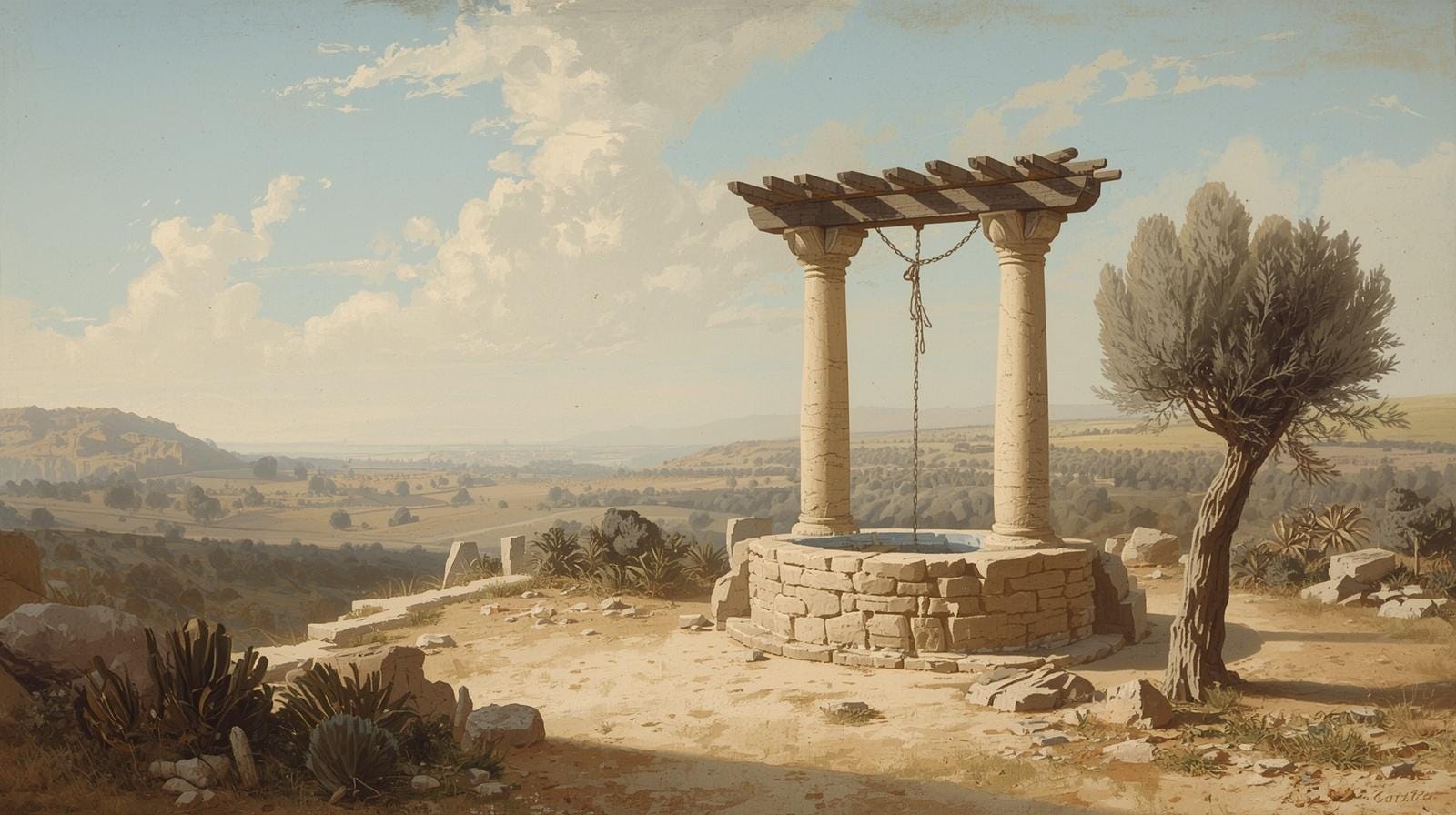
John 4:21-24 (NIV)
21 “Woman,” Jesus replied, “believe me, a time is coming when you will worship the Father neither on this mountain nor in Jerusalem. 22 You Samaritans worship what you do not know; we worship what we do know, for salvation is from the Jews. 23 Yet a time is coming and has now come when the true worshipers will worship the Father in the Spirit and in truth, for they are the kind of worshipers the Father seeks. 24 God is spirit, and his worshipers must worship in the Spirit and in truth.”
The Conversation That Got Here
Jesus is sitting by a well in Samaria. He has asked a Samaritan woman for water. She has been surprised — Jews do not associate with Samaritans, and men do not typically initiate conversations with women alone at wells. He has spoken to her about living water. She has asked for it without fully understanding what He means. He has told her everything about her life — five husbands, the man she is with now who is not her husband — and she has recognised that He is a prophet.
And so she does what people often do when a conversation gets uncomfortably close to the personal. She pivots to theology.
Our ancestors worshipped on this mountain, but you Jews claim that the place where we must worship is in Jerusalem.
It is the oldest theological dispute between Jews and Samaritans — the question of the correct location of worship. The Samaritans had built their temple on Mount Gerizim. The Jews insisted Jerusalem was the only legitimate site. The question was centuries old and deeply entrenched. It was also, in this conversation, a way of deflecting from the more personal ground Jesus had just covered.
Jesus does not refuse the pivot. He takes the theological question seriously. But His answer does not resolve the dispute in favour of either mountain. It dissolves the framework that makes the dispute possible in the first place.
Neither This Mountain nor Jerusalem
A time is coming when you will worship the Father neither on this mountain nor in Jerusalem.
The declaration is more radical than it first appears. Jesus is not simply saying that the Samaritans are wrong about Gerizim and the Jews are right about Jerusalem. He is saying that the entire geography-based framework of worship is about to become obsolete. The question of which mountain is the correct one will soon be irrelevant — not because both mountains are equally valid but because neither mountain is the point anymore.
This is a statement about what the Incarnation is doing to the structure of worship. The whole temple system — the Jerusalem temple with its courts and its Holy of Holies and its curtain separating the people from the presence of God — was the architecture of a particular phase of the relationship between God and His people. It was real. It was ordained. It pointed toward something. But it was always pointing, not arriving. The presence of God in the temple was the promise of a presence that was coming more fully, more directly, more personally than any building could contain.
Jesus is standing at the well in Samaria and the presence of God is there — not in Jerusalem, not on Gerizim, but in the person of the one speaking. The temple and the mountain were always pointers. The one they were pointing to has arrived. And when the destination has been reached, the signpost is no longer what matters.
Salvation Is from the Jews
Before He dissolves the geography, Jesus is precise about the history.
You Samaritans worship what you do not know. We worship what we do know, for salvation is from the Jews.
This is not a dismissal of the woman or her people. It is an honest statement about the shape of the revelation that God chose to give. The Samaritans had accepted only the Pentateuch — the five books of Moses — and had rejected the Prophets and the Writings. Their knowledge of God was partial, their worship built on an incomplete foundation.
The Jews had the fuller revelation — the Law and the Prophets and the Psalms, the whole long story of God’s dealings with Israel, the prophetic promises pointing forward to the one who was coming. And the one who was coming — the Messiah through whom salvation would reach the world — was coming through that particular lineage, that particular people, that particular covenant history.
Jesus is the Saviour of the world, but He comes to the world through Israel. The universal destination does not erase the particular route. Salvation is from the Jews — and the one delivering this news to the Samaritan woman at the well is Himself the fulfillment of that Jewish salvation, bringing it to the very people who had been excluded from it.
The theology is precise and it is honest. And then He moves to what the theology is actually in service of.
A Time Is Coming and Has Now Come
Yet a time is coming and has now come.
The tense is remarkable. Future and present collapsed into the same sentence. The time that is coming has already arrived in the person of the one speaking. This is not a promise being held out for some distant future fulfillment. It is a description of what is happening at the well in this conversation — the new mode of worship, the worship in Spirit and truth, is not something that will be available after Jesus leaves. It is available because Jesus is present.
The woman is talking to the living water. She is in the presence of the one the whole history of worship was pointing toward. The time that is coming has now come — and it is sitting across from her by a well in Samaria, knowing everything she has ever done and offering her something that will never leave her thirsty again.
This compression of future and present is characteristic of how the kingdom works throughout John’s gospel. The eternal life that the believer will have — the resurrection, the restoration, the fullness of God’s presence — is also, in some real sense, already begun. Not completed. Not fully arrived. But genuinely inaugurated in the person of Jesus and continued in the presence of the Spirit He gives. The time is coming and has now come. The new is already here, even as the fullness of it is still approaching.
In Spirit and in Truth
The new worship that Jesus describes has two characteristics — Spirit and truth — and both need to be understood together rather than separately.
In the Spirit addresses the location question. The limitation of the mountain and the temple was that they located the presence of God in a place — a physical space that you had to travel to, that had geographic and ethnic and ritual barriers to access. Worship in the Spirit is worship that is not constrained by location because the Spirit is not constrained by location. The presence of God is not in the building. The presence of God is in the Spirit who dwells in the person of the believer — who can worship on Gerizim or in Jerusalem or in Samaria by a well or in Singapore in the early morning before the city wakes up.
In truth addresses the content question. The Samaritans worshipped what they did not know — their worship was sincere but uninformed, built on an incomplete picture of who God is and what He has done and what He is doing. Worship in truth is worship that corresponds to reality — worship shaped by the actual character of God as He has revealed Himself, culminating in the revelation that is sitting across from the woman at the well.
Together, Spirit and truth describe the same thing from two angles. The Spirit brings genuine, living, unmediated access to the Father. Truth brings the correct understanding of who the Father is that the Spirit enables the worshipper to engage with. Worship in the Spirit without truth can become experiential without substance — feeling-driven rather than reality-anchored. Worship in truth without the Spirit can become intellectual without life — correct doctrine held at a distance rather than lived from the inside.
Jesus joins them because they belong together. The Spirit who indwells the believer is the Spirit of truth — the one Jesus will later promise will lead His disciples into all truth. Genuine worship requires both. The inner reality of the Spirit’s presence and the outward orientation of that presence toward the God who actually is rather than the God we have constructed.
The Father Seeks
There is a phrase in verse 23 that is easy to read past and should not be.
They are the kind of worshippers the Father seeks.
God is seeking worshippers. Not passive, not indifferent, not simply available to receive worship if it is offered correctly. Actively seeking. Looking for the people who will worship in Spirit and truth. Moving toward them. The image of a God who seeks — who searches, who pursues, who is not waiting to be found but is actively looking for the person who will genuinely come to Him — is the same God who sent the shepherd after the one lost sheep and the father who ran toward the prodigal son when he was still a long way off.
The God who is spirit, the God who is not contained in any building or mountain, is actively seeking the people who will worship Him as He actually is. The Samaritan woman at the well is one of them. The conversation she is having with Jesus is not an accident or a coincidence. She is being sought. The one doing the seeking has come all the way to a well in Samaria — through territory Jews normally avoided — to find her.
This is the trajectory of the whole encounter. Jesus does not start with the theology. He starts with the woman. He asks for water. He tells her everything she has ever done. He offers her living water. And then — when she pivots to the theological question about mountains — He gives her the theology that explains what is already happening in the conversation. She is already, in this moment, being drawn into the worship in Spirit and truth that He is describing. The living water He offers is the Spirit. The truth is the person sitting across from her.
God Is Spirit
The single sentence that grounds the whole teaching on worship is verse 24.
God is spirit.
Not — God has a spirit, as if spirit were a property He possesses alongside others. God is spirit — spirit is what He is, His fundamental nature, the reason He cannot be contained in a location and the reason worship of Him cannot be location-dependent. The one who fills the whole earth, in whom we live and move and have our being, before whom David said where can I go from your Spirit — that God is not more present in Jerusalem than in Samaria, not more accessible on Gerizim than anywhere else.
He is everywhere and He is seeking worshippers everywhere. The only access requirement is the one He Himself provides — the Spirit He gives to those who ask, the truth He reveals through the Son who is the Word made flesh. Both given freely. Both available at a well in Samaria as fully as in the temple in Jerusalem.
The woman who came to the well alone, in the middle of the day, avoiding the hour when the other women came — who had five husbands and was living with a man who was not her husband — is told by Jesus that the Father is seeking her kind of worship. Not despite who she is. She is the kind the Father seeks — because the seeking is not based on the worshipper’s record but on the Father’s desire to be genuinely known and genuinely met.
Walk On
The dispute between the mountains was real in its time. Its equivalent today is the dispute about forms — which style of worship, which tradition, which building, which denominational approach is the correct one. And like the mountain dispute, it tends to be a way of avoiding the more personal question that Jesus pressed the woman toward before the theology arrived.
Worship in Spirit and truth is not a style. It is a posture. The inward reality of a person who is genuinely oriented toward the Father — whose worship flows from the Spirit dwelling within them and is shaped by the truth of who God actually is — rather than the external performance of the correct forms in the correct location.
The Father is seeking this. Actively. The one who sought out a Samaritan woman at a well in the middle of the day and told her everything she had ever done and offered her living water is still seeking. The Spirit He promised has been given. The truth He embodied in the Word made flesh has been preserved in the Scripture He inspired.
Worship is not primarily about what happens in a building on Sunday. It is about what is happening in the interior of a life that has been found by the God who seeks — and that responds to being found with the only appropriate response.
Spirit and truth. Nothing held back. The Father seeks this.
Let Him find it.
All glory to God — forever and ever. Amen. 🤍
If this reflection spoke to you, consider subscribing to follow along my journey of faith, meditation, and rebuilding — one day at a time. Your support truly means more than you know. ❤️